
Can AI Bots Be Used to Trade Profitably or Is It All Hype?
The promise is seductive. Set up a bot, let it trade while you sleep, and wake up richer. AI trading has exploded into a $24.53 billion industry, yet most retail traders using these tools still lose money. The truth? Only a fraction of AI systems deliver consistent returns. And the difference between the winners and losers comes down to factors most traders overlook entirely.
This article cuts through the noise. We’ll cover:
- Whether AI trading bots actually generate real profits
- How these bots analyze markets and execute trades
- The risks and limitations you need to understand
- How to separate legitimate AI tools from scams and hype
- What makes some bots succeed while most fail
- The critical role of back testing, data quality, and risk management
No fluff. No wild promises. Just the reality of AI-powered trading.
Let’s get into it.
Do AI Trading Bots Actually Generate Real Profits?
Short answer: yes, but not for everyone.
The global AI trading market hit $24.53 billion in 2025. That’s not speculation money. It’s institutional and retail traders betting real capital on automated systems. Top AI trading platforms like Tickeron have demonstrated annualized returns up to 48% on specific strategies, with profit factors exceeding 4.0. For context, a profit factor above 4.0 means earning $4 for every $1 lost.
Industry data shows that only 10 to 30% of traders using AI bots achieve consistent profitability. The rest? They either break even or lose money.
What Separates Winners from Losers
The difference isn’t the bot itself. It’s how you build and use it.
When tested against other AI tools for creating Tradingview.com PineScript strategies, DeepSeek R1 delivered surprisingly strong results. In one documented test, a trader used DeepSeek to build a 15-minute reversal strategy that generated 110% profit with a 72% win rate and only 6% max drawdown. A 4-hour trend-following strategy produced over 700% back tested returns.
These weren’t plug-and-play results. They required:
- Prompt iteration: Telling the AI exactly what indicators and filters to use
- Code debugging: Fixing errors when the PineScript didn’t compile
- Parameter optimization: Tweaking settings like ATR multipliers, EMA periods, and filter toggles
- Back testing validation: Confirming the strategy performed across different market conditions
The Hard Truth About “Profitable” Bots
Most commercial AI trading bots focus on correlations rather than causation, creating systems that may appear profitable in back testing but fail when deployed with real capital.
DeepSeek can write functional PineScript code. It can add volume filters, RSI conditions, and ATR-based stop losses. But it won’t magically produce a winning strategy on the first try.
In one test where DeepSeek was asked to create a strategy from scratch with minimal input, it produced a working bot. But results varied wildly depending on the timeframe. The same code failed on 30-minute charts yet delivered a 58% return with 13% drawdown on the 4-hour chart.
Pro tip: Never expect your first AI-generated strategy to work. Treat it as a starting point, then refine through testing and iteration.
How AI Bots Analyze Markets and Execute Trades
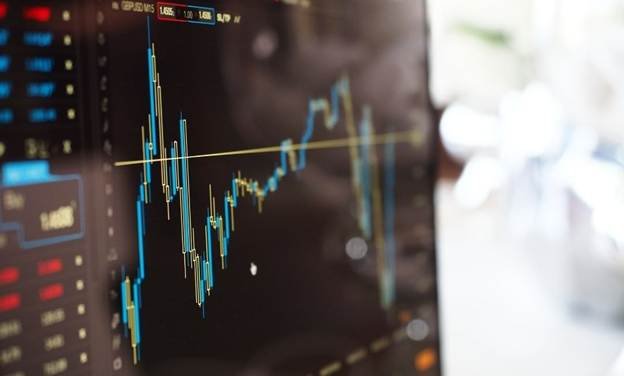
Understanding how these systems work helps you build better ones.
At its core, an AI trading bot follows a simple loop: collect data, analyze patterns, generate signals, execute trades. But the devil is in the details.
The Data Ingestion Layer
When you use DeepSeek to create a Tradingview.com PineScript strategy, the bot pulls data directly from your chart. This includes:
- Price action: Open, high, low, close (OHLC) candles
- Volume: Buying and selling pressure
- Technical indicators: RSI, MACD, Bollinger Bands, ATR, EMAs
- Custom calculations: Trend lines, support/resistance levels, pivot points
In one documented test, a trader used DeepSeek to build a strategy around the “Reversal Trade Detector” indicator. The AI analyzed the indicator’s logic for detecting change of character in price structure and inducement moves that trap traders before reversals.
Signal Generation
The AI doesn’t just spit out random buy/sell signals. When prompted correctly, DeepSeek adds filters to reduce false entries:
- Volume filter: Only enter when volume exceeds a moving average threshold
- Trend filter: Use EMA to confirm you’re trading with the trend
- RSI filter: Avoid overbought or oversold conditions
- ATR-based stops: Dynamic stop-loss and take-profit levels based on volatility
One trader reported that enabling all filters simultaneously produced zero trades because conditions were too restrictive. The solution? Selectively toggle filters to find the balance between signal frequency and accuracy.
Trade Execution
Once a signal triggers, the bot can execute automatically through platforms like 3Commas or directly via Tradingview.com alerts connected to your exchange.
Pro tip: The strategy code DeepSeek generates defines entry and exit logic. But you control position sizing, risk per trade, and whether to run it live or paper trade first.
The Risks and Limitations You Need to Understand
AI won’t save you from bad decisions. It will accelerate them.
Market Conditions Change
A strategy that prints money in trending markets can bleed out during consolidation. One trader tested a DeepSeek-generated price action strategy on Bitcoin’s 30-minute chart. It failed completely. But the same code delivered a 58% return on the 4-hour chart.
Why? Different timeframes exhibit different market behavior. A bot optimized for one environment won’t automatically adapt to another.
AI Makes Mistakes
DeepSeek generates functional PineScript, but it’s not perfect. Common issues include:
- Functions defined in the wrong order: PineScript requires functions to be declared before they’re called
- Indicator miscalculations: The AI may interpret stochastic RSI differently from Tradingview.com’s built-in version
- Logic errors: Entry conditions that look right but produce unexpected trades
In one test, a trader had to manually fix the code by moving function declarations above the line that called them. Another approach: paste the error message back into DeepSeek and ask it to fix the issue. It often works on the second or third attempt.
Emotional Override
Bots don’t have emotions. But you do.
The moment a strategy hits a losing streak, the temptation is to intervene. Disable the bot. Change the settings. Override the signals. This defeats the entire purpose of automation and often leads to worse outcomes than letting the system run.
How to Separate Legitimate AI Tools from Scams

Scammers claim AI-created algorithms can generate huge returns, sometimes tens of thousands of percent, or yield 100 percent win rates. The CFTC has issued multiple warnings about this exact problem.
Red Flags to Watch For
| Warning Sign | Why It’s Dangerous |
| “Guaranteed” returns | No trading system can guarantee profits |
| 90%+ win rates advertised | Likely overfitted or fabricated |
| No verifiable track record | If you can’t see real results, assume there are none |
| Pressure to deposit quickly | Classic scam tactic |
| Celebrity endorsements | Often, deepfakes or paid promotions |
How to Verify Legitimacy
The CFTC recommends these steps before trusting any AI trading tool:
- Research the company background: Check the domain age at lookup.icann.org
- Reverse image search key personnel: Verify identities aren’t stolen photos
- Get a second opinion: Talk to a financial advisor or trusted friend
- Understand the underlying risks: Know what you’re trading and the fees involved
The DIY Advantage
Building your own strategy with DeepSeek and Tradingview.com sidesteps most scam risks. You control the code. You see exactly what the bot does. You run back tests yourself.
This transparency is why the “build it yourself” approach often beats buying pre-made bots with black-box logic you can’t verify.
What Makes Some Bots Succeed While Most Fail
Only 10 to 30% of traders using AI bots achieve consistent profitability. So what separates the winners?
They Iterate Relentlessly
In testing DeepSeek against other AI models, one trader ran the same prompt three times and got different results each time. AI outputs are probabilistic, not deterministic. The same input can produce varying code quality.
Lesson: Don’t expect your first attempt to work. Treat each output as a starting point, then refine.
They Match Strategy to Market Conditions
The traders who succeed understand when to use their bot:
- Trend-following strategies work in directional markets
- Mean reversion strategies work in ranging markets
- Breakout strategies work during volatility expansion
A 4-hour swing trading strategy won’t perform the same as a 15-minute scalping system. One DeepSeek test produced 700% back tested returns on a 4-hour trend-following strategy but struggled on shorter timeframes.
They Keep It Simple
Complexity is the enemy of robustness. Adding more indicators doesn’t always improve results.
In one experiment, a trader asked DeepSeek to create a price action strategy with no technical indicators. Just candle patterns, wicks, and volume. The AI built a system that analyzed body size, wick ratios, and momentum across multiple timeframes. It wasn’t perfect, but it earned a 7/10 rating for delivering usable results from minimal input.
Pro tip: Start with a simple strategy. Add complexity only when you have evidence it improves performance.
The Critical Role of Back testing, Data Quality, and Risk Management
Your strategy is only as good as how you test it.
Why Back testing Lies
If your backtest delivers triple-digit annual returns with minimal drawdowns, especially without leverage, take a step back. In most markets, such performance is rare and often a sign of a curve-fitted strategy.
Back testing shows how a strategy would have performed on historical data. But markets don’t repeat exactly. A strategy tuned too tightly to past conditions will fail when conditions change.
This is called overfitting or curve fitting. It happens when you optimize parameters so precisely that the strategy memorizes historical noise instead of learning actual market patterns.
Signs Your Strategy Is Overfit
- Unrealistically smooth equity curve with no drawdowns
- Dramatically different results on different timeframes or assets
- Performance collapses when you shift the test period by a few weeks
- A strategy might show impressive returns but also come with significant risks, like large drawdowns or reliance on a few lucky trades
How to Validate Properly
| Technique | What It Does |
| Out-of-sample testing | Test on data the strategy has never seen |
| Walk-forward analysis | Repeatedly optimize on one period, test on the next |
| Monte Carlo simulation | Shuffle trade order to see if results hold |
| Multi-asset testing | Run the same logic on different markets |
In Tradingview.com’s Strategy Tester, you can evaluate key metrics:
- Net profit: Total return after all trades
- Max drawdown: Largest peak-to-trough decline
- Profit factor: Gross profit divided by gross loss (above 1.5 is solid)
- Win rate: Percentage of profitable trades
One DeepSeek-generated strategy showed110% profit with a 72% win rate and only 6% max drawdown. Those numbers are strong because the risk metrics align with the returns.
Risk Management Non-Negotiables
No matter how good your strategy looks, these rules protect you:
- Never risk more than 1-2% per trade
- Always use stop-losses (ATR-based stops adapt to volatility)
- Start with paper trading before going live
- Scale position size slowly as you gain confidence
The traders who survive long-term aren’t the ones with the highest win rates. They’re the ones who manage risk so that losing streaks don’t wipe them out.
Build Smarter Trading Strategies with DeepSeek and Tradingview.com
AI trading bots can generate real profits, but only when you approach them with the right mindset. The winners aren’t chasing magic algorithms. They’re iterating, testing, and managing risk like professionals. Here’s what to remember:
- AI bots work, but not for everyone. Only 10-30% of traders achieve consistent profitability with automated systems.
- DeepSeek can write functional PineScript. But expect to debug, refine, and test multiple versions before finding a winner.
- Back testing lies. Overfitted strategies look amazing on paper but collapse in live markets. Validate with out-of-sample data.
- Scams are everywhere. If someone promises 90%+ win rates or guaranteed returns, walk away.
- Risk management is non-negotiable. Position sizing and stop-losses protect you when strategies fail.
- Simplicity beats complexity. Start with fewer indicators and add layers only when evidence supports it.
The combination of Tradingview.com’s charting and back testing tools with DeepSeek’s free AI coding capabilities gives retail traders access to strategy development that once required expensive developers. You control the logic, see every line of code, and test before risking real capital. That transparency is your edge.