
Trading Indicators Explained: Which Ones Actually Matter (And Which Are Noise)
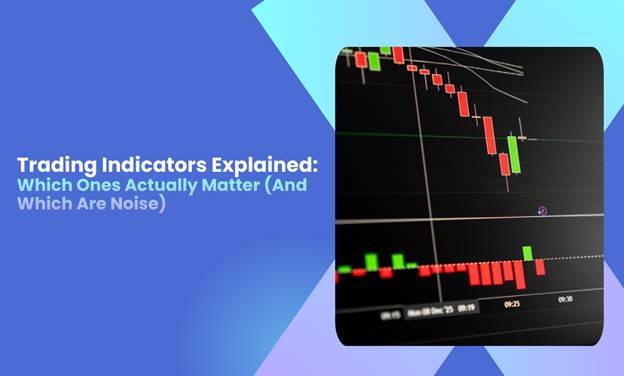
More indicators don’t mean better trades. In fact, most traders lose money because they stack too many signals on one chart, get conflicting readings, and freeze at the worst possible moment. The real edge comes from knowing which indicators to trust, when to use them, and how to combine them without creating noise.
This guide breaks it all down:
- What trading indicators are and how they actually work
- The different types: trend, momentum, volatility, and volume
- Which indicators matter most for your trading style
- How to combine indicators without overloading your chart
- Common mistakes that turn good signals into bad trades
- Free and paid tools to put your indicators to work
So, if you’ve been staring at charts for years or just added your first RSI, this guide will help you cut through the clutter. Less noise. More clarity. Let’s get into it.
What Trading Indicators Are
Trading indicators are math-based tools that take raw price and volume data from a chart and turn it into visual signals. Think of them as filters. Instead of staring at thousands of candlesticks trying to guess what comes next, indicators distill that information into something readable.
They don’t predict the future. That’s a common misconception worth killing early. What they do is highlight patterns, measure momentum, and flag conditions that have historically led to certain outcomes. You’re playing probabilities, not prophecies.
Leading vs. Lagging
There are two broad categories:
- Leading indicators try to signal moves before they happen. RSI and the Stochastic Oscillator fall here. They’re useful for timing entries, but they produce more false signals.
- Lagging indicators confirm trends after they’ve started. Moving averages and MACD are classic examples. They’re more reliable but slower to react.
Neither type is better. They serve different purposes, and the best traders use both in combination.
How They’re Built
Most indicators rely on some variation of these inputs:
- Price (open, high, low, close)
- Volume (how many shares or contracts traded)
- Time (the lookback period, like 14-day RSI or 50-day moving average)
The math runs in the background. Your job is to understand what the output means and when to trust it. A rising RSI tells you buyers are gaining strength. A tightening Bollinger Band tells you a breakout may be brewing. The indicator does the calculation. You make the decision.
Pro tip: Don’t treat any indicator as a standalone answer. It’s a clue, not a verdict.
The Four Types of Indicators
Not all indicators measure the same thing. Understanding the four main categories helps you pick the right tool for the right job, instead of stacking five signals that all say the same thing.
Trend Indicators
These tell you where the market is heading. They smooth out price noise so you can see the bigger picture.
- Moving Averages (SMA & EMA): The backbone of trend analysis. A stock trading above its 50-day EMA is generally in an uptrend.
- MACD: Tracks the relationship between two EMAs to spot shifts in trend direction and momentum.
Momentum Indicators
These measure how fast the price is moving and whether that speed is increasing or fading.
- RSI: Ranges from 0 to 100. Below 30 suggests oversold. Above 70 suggests overbought.
- Stochastic Oscillator: Compares a stock’s closing price to its recent range. Useful in sideways markets.
Volatility Indicators
These measures show how much the price is fluctuating, which helps you set stops and anticipate breakouts.
- Bollinger Bands: Expand during volatile moves, contract during quiet periods. A squeeze often signals that a big move is coming.
- ATR (Average True Range): Tells you the average range a stock moves per day. Great for sizing stop losses.
Volume Indicators
These confirm whether price moves have real participation behind them.
- OBV (On-Balance Volume): Tracks cumulative buying and selling pressure.
- VWAP (Volume-Weighted Average Price): Shows the average price weighted by volume. Institutional traders watch this closely.
| Type | What It Measures | Key Tools |
| Trend | Direction | SMA, EMA, MACD |
| Momentum | Speed of movement | RSI, Stochastic |
| Volatility | Size of price swings | Bollinger Bands, ATR |
| Volume | Participation behind moves | OBV, VWAP |
Pick one indicator from each category. That gives you a complete picture without redundancy.
Which Indicators Match Your Style
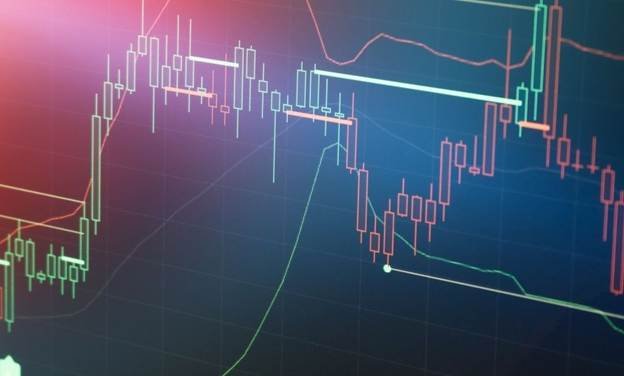
The “best” indicator depends entirely on how you trade. A day trader scalping five-minute charts needs different tools than a swing trader holding positions for two weeks. Matching indicators to your style is what separates signal from noise.
Day Traders
You need speed. Fast-responding tools that react to intraday price action work best here.
- VWAP for identifying fair value throughout the session
- 9-period EMA for quick trend direction
- RSI (short period, like 7 or 9) for spotting overbought/oversold conditions in real time
Swing Traders
You’re looking at daily charts and holding for days to weeks. You need indicators that filter out the noise while catching medium-term trends.
- 20-day and 50-day EMA for trend confirmation
- RSI (14-period) for momentum reads
- MACD for detecting shifts in buying or selling pressure
Position Traders and Investors
You’re playing the long game. Weekly charts. Bigger moves. Fewer trades.
- 200-day SMA for identifying the primary trend
- Bollinger Bands (weekly) for spotting long-term volatility patterns
- OBV for confirming whether institutional money is flowing in or out
Quick Match Guide
| Trading Style | Timeframe | Best Indicators |
| Day Trading | 1-min to 15-min | VWAP, 9 EMA, Short RSI |
| Swing Trading | Daily | 20/50 EMA, RSI, MACD |
| Position Trading | Weekly | 200 SMA, Bollinger Bands, OBV |
There’s no universal setup. Start with the indicators that align with your holding period, test them on a demo account, and refine from there.
Combining Indicators the Right Way
Here’s where most traders go wrong. They pile on six or seven indicators, thinking more data equals better decisions. It doesn’t. It creates conflicting signals, second-guessing, and missed trades.
The goal is confluence, not clutter.
The Rule of Three
Stick to two or three indicators that each measure something different. If you’re using RSI and Stochastic together, you’re essentially getting two momentum readings. That’s redundancy, not confirmation.
A strong combination covers three bases:
- Trend (where is price going?)
- Momentum (how strong is the move?)
- Confirmation (is volume or volatility supporting the signal?)
A Practical Example
Let’s say you’re swing trading. Here’s a clean, three-indicator setup:
- 20-day EMA shows the price is in an uptrend
- RSI dips below 40 and starts curving back up (momentum returning)
- Volume spikes on the bounce (buyers stepping in)
All three align. That’s confluence. You now have a higher-probability entry than any single indicator could give you alone.
What to Avoid
- Indicator overlap: Using MACD and two moving averages, and RSI all at once. Most of these are tracking the same underlying data.
- Chart clutter: If you can’t see the actual candlesticks anymore, you’ve gone too far.
- Indicator hopping: Switching tools every time a trade doesn’t work out. Stick with a setup long enough to evaluate it properly.
A clean chart with three purposeful indicators will outperform a cluttered one with ten every single time.
Before adding any indicator, ask yourself: “Does this tell me something the others don’t?” If the answer is no, leave it off.
Mistakes That Ruin Good Signals
Trading indicators are only as good as the person reading them. Even the most reliable setup can fall apart when bad habits creep in. Here are the mistakes that quietly turn winning signals into losing trades.
- Treating indicators as gospel. RSI hitting 30 doesn’t guarantee a bounce. It means selling pressure has been heavy. The stock can stay oversold for weeks in a strong downtrend. Context matters more than the number.
- Ignoring the bigger picture. You spot a bullish MACD crossover on the 15-minute chart while the daily chart is screaming bearish. The higher timeframe wins. Always check at least one timeframe above the one you’re trading.
- Overoptimizing settings. Spending hours tweaking RSI from 14 to 13.5 periods won’t give you an edge. The difference is marginal. Your energy is better spent on discipline and risk management.
- Using indicators in the wrong market. Trend indicators work in trending markets. Oscillators like RSI and Stochastic work better in ranging markets. Using the wrong tool for the conditions is like using a hammer on a screw. Technically possible. Practically useless.
- Skipping backtesting. If you’ve never tested your indicator setup against historical data, you’re trading on hope. Even a basic manual backtest on 50 to 100 past setups can reveal whether your strategy has a real edge.
- Chasing confirmation bias. You want the trade to work, so you keep adding indicators until one finally agrees with you. That’s not analysis. That’s justification.
The indicator didn’t fail. The process around it did.
Keep a simple log of every trade. Note which indicators you used, what the signal was, and whether the trade worked. After 30 to 50 trades, patterns in your mistakes will become obvious.
Tools to Put Indicators to Work
You don’t need expensive software to start using trading indicators effectively. But the right platform makes a real difference in how quickly you can spot setups, test ideas, and execute trades.
Free Tools
| Platform | Best For | Highlights |
| TradingView (Free) | All-around charting | 100+ built-in indicators, active community, clean interface |
| ProRealTime (Free) | Unlimited indicator stacking | No cap on indicators per chart, multi-layout support |
| Yahoo Finance | Quick basic charts | Simple interface, good for beginners, checking daily trends |
| Finviz | Screening + visual scans | Heatmaps, pattern recognition, fast filtering |
TradingView’s free plan gives you access to the main charting tool with global market data, though it limits you to two indicators per chart. If that feels restrictive, the paid tiers unlock more.
Paid Tools Worth Considering
| Platform | Starting Price | Why It’s Worth It |
| TradingView Pro+ | ~$30/month | Up to 10 indicators per chart, multi-chart layouts, and alerts |
| TrendSpider | ~$33/month | Automated technical analysis, pattern recognition |
| TC2000 | ~$10/month | Real-time scanning with EMA/RSI filters, fast execution |
| StockCharts | ~$20/month | Classic charting, predefined scans, great for swing traders |
What to Look For in a Platform
Before you commit, make sure the tool covers these basics:
- Real-time data (or close to it)
- Customizable indicators with adjustable settings
- Multi-timeframe support so you can check daily and weekly charts side by side
- Screening and alerts to flag setups without you staring at the screen
You don’t need all of these on day one. Start with a free platform, learn two or three indicators well, and upgrade only when you’ve outgrown the tool.
Pro tip: TradingView’s community has over 100,000 user-built scripts and indicators. Before building your own, search for what others have already created. There’s a good chance someone has built exactly what you need.
Stop Guessing, Start Reading the Market
Trading indicators aren’t magic. They’re tools. And like any tool, their value comes down to how well you understand them, when you use them, and whether you have the discipline to follow what they’re telling you.
Here are the key takeaways:
- Indicators translate raw price and volume data into visual signals you can act on
- The four types (trend, momentum, volatility, volume) each measure something different
- Match your indicators to your trading style and timeframe
- Combine two to three indicators for confluence, not clutter
- Backtest your setups and log your trades to find patterns in your own behavior
- Start with free tools like TradingView or ProRealTime before spending money on paid platforms
The traders who get the most out of trading indicators aren’t the ones using the fanciest setups. They’re the ones who mastered a handful of tools, built a process around them, and stuck with it long enough to see results. Keep it simple. Stay consistent. Let the signals do the talking.